Minesweeper Ultimate Guide
A minesweeper logic puzzle starts with a grid containing some number clues. The clues tell you the
number of mines that are in the surrounding cells (horizontally, vertically, and diagonally).
Minesweeper logic puzzles can be solved using logic alone, with no guessing required, and have a unique solution.
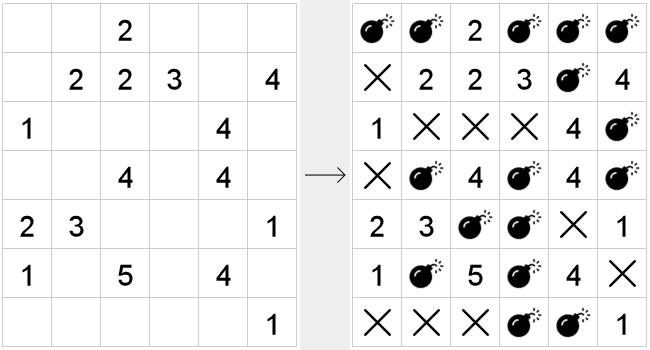
The crosses in the empty cells aren't required, but they will make the puzzle easier to solve.
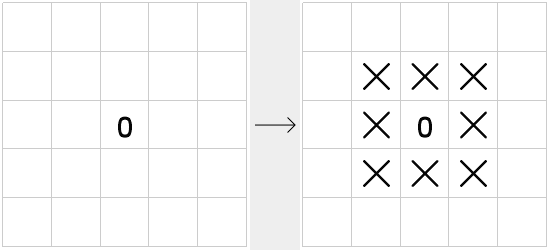
Start with the 0 clues
The 0 clues are the obvious place to start with a Minesweeper puzzle - no mines in the
surrounding 8 cells, so mark them all as empty.
Forced mines
Look for clues that have exactly the same number of unknown squares around them - all of the unknown squares
must be mines.
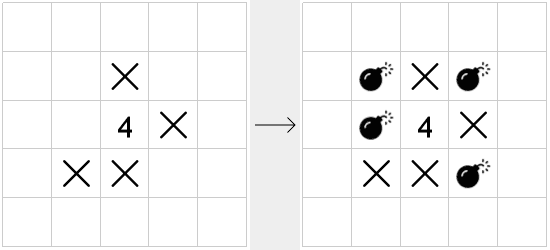
There might already be some mines in place.
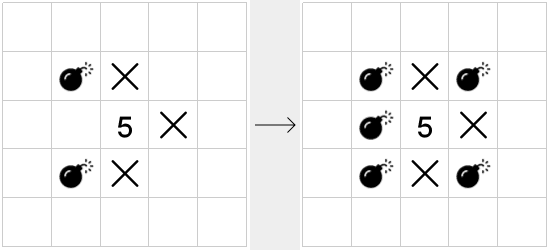
Satisfied clues
If you see any clues that have the required number of mines, mark any remaining cells as empty.
Strictly speaking, it's not required, but it will help you solve the rest of the puzzle.
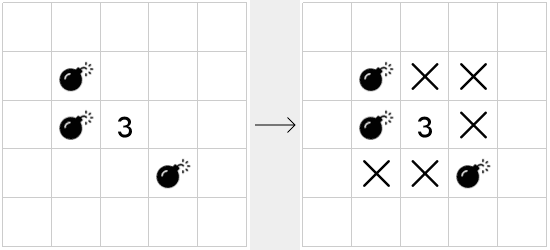
Adjacent 1 clues
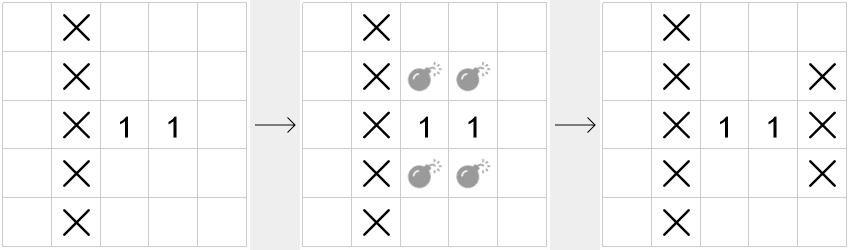
Most of the minesweeper techniques require you to reason about two (or more) clues in the same area.
In this situation we have adjacent 1 clues. Looking at the 1 clue on the left, there are four possible locations
the mine could be placed. We don't know which location will contain a mine, but every possible placement will
satisfy the 1 clue on the right as well. This allows us to mark all the other candidate cells for the 1 clue on the
right as empty.
Adjacent 2 clues
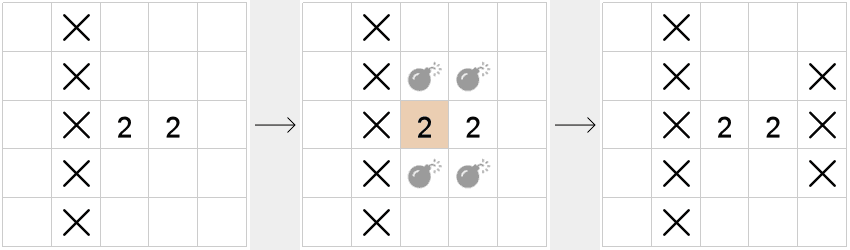
This is very similar to adjacent 1 clues above.
These are the possible mine locations for the highlighted 2 clue - exactly two of these locations must
contain a mine.
All of these possible locations will also satisfy the other 2 clue, which means we can mark all the other candidate cells for the 2 clue on the right as empty.
All of these possible locations will also satisfy the other 2 clue, which means we can mark all the other candidate cells for the 2 clue on the right as empty.
Adjacent 3 clues
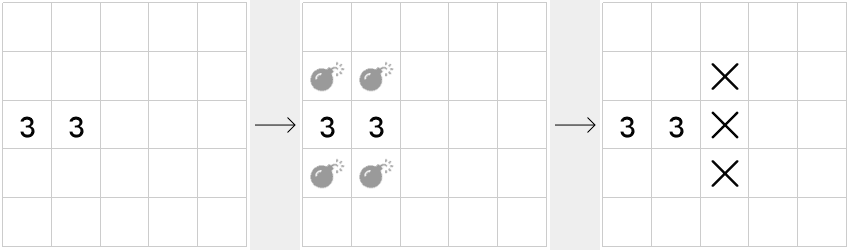
Again, very similar to adjacent 1 and 2 clues
These are the possible mine locations for the highlighted 3 clue - exactly two of these locations must
contain a mine.
All of these possible locations will also satisfy the other 3 clue, which means we can mark all the other candidate cells for the 3 clue on the right as empty.
All of these possible locations will also satisfy the other 3 clue, which means we can mark all the other candidate cells for the 3 clue on the right as empty.
Adjacent small/large numbers
Look for situations where you have a small and a large clue next to each other.
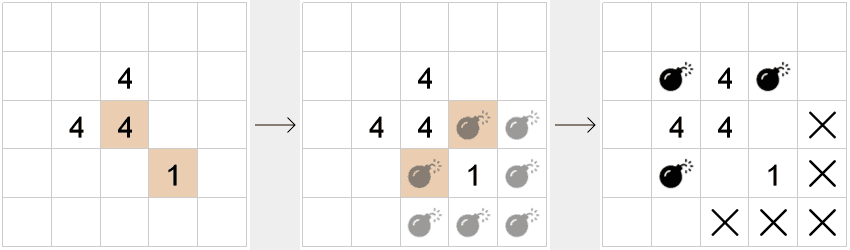
In this situation we have an adjacent 1 and 4. The second image shows the possible locations of the mine to satisfy the
1 clue - only one of these possible locations can be a mine.
We also need to satisfy the 4 clue - at most, 1 mine will come from the highlighted cells. This only leaves three other cells, i.e. the exact number of mines we need, and we can fill these three cells with mines.
We also need to satisfy the 4 clue - at most, 1 mine will come from the highlighted cells. This only leaves three other cells, i.e. the exact number of mines we need, and we can fill these three cells with mines.
Further, the 4 clue requires one of the highlighted cells to be a mine. Whichever it is, the 1 clue will be satisfied,
i.e. we know all the other possible locations must be empty.
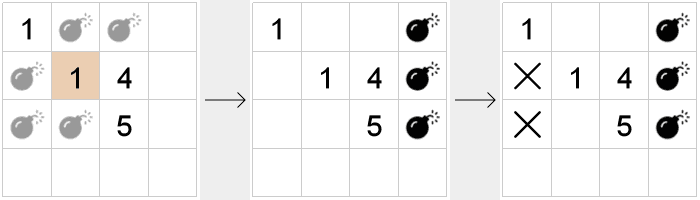
This is another example - the highlighted 1 clue means that we must have 1 mine in one of these highlighted
cells. At most, one of these possible mines will be a mine - but the adjacent 4 clue would still need at
least another three mines, and there's only one way to insert these.
Further, we still need one more mine to satisfy the 4 clue, wherever we place this mine, the 1 clue will be
satisfied as well. This means the far left cells can't be mines.
Adjacent numbers
You should also look at partially satisfied clues.
This 4 clue already has two mines, and needs two more. The other two mines must come from the highlighted
possible locations, but we don't know which yet.
All of these locations will also satisfy exactly two out of three mines required for 3 clue, i.e. the 3 clue will require one more mine outside of these possible locations, and there is only one possible location for this.
All of these locations will also satisfy exactly two out of three mines required for 3 clue, i.e. the 3 clue will require one more mine outside of these possible locations, and there is only one possible location for this.

Chain
For harder Minesweeper grids you will need to chain together a series of logical deductions.
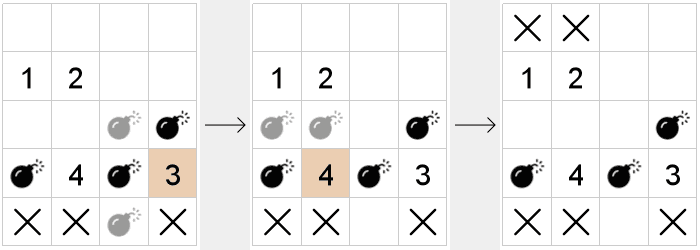
The highlighted 3 clue requires exactly one more mine, and there are 2 candidate locations.
Both locations with also satisfy the 4 clue.
This leaves the highlighted 4 clue requiring one more mine, there are two possible locations for this.
Both these locations will satisfy the 1 clue.
This means that the two cells above the 1 clue must be empty.
Conclusion
These are all the techniques required to solve the Minesweeper puzzles on PuzzleMadness.
Easy puzzles only require you to look at individual clues and apply Forced Mines and Satisfied Clues - you should be
able to make progress on a puzzle quite quickly.
Medium puzzles will require you to look at pairs of clues, i.e. you will be able to make some progress just Looking
at individual clues, but finishing Medium puzzle requires you to look at pairs of clues.
Hard puzzles require you to chain together a series of logical deductions. Some will be difficult to spot and progress
through the puzzle will be slow at times.